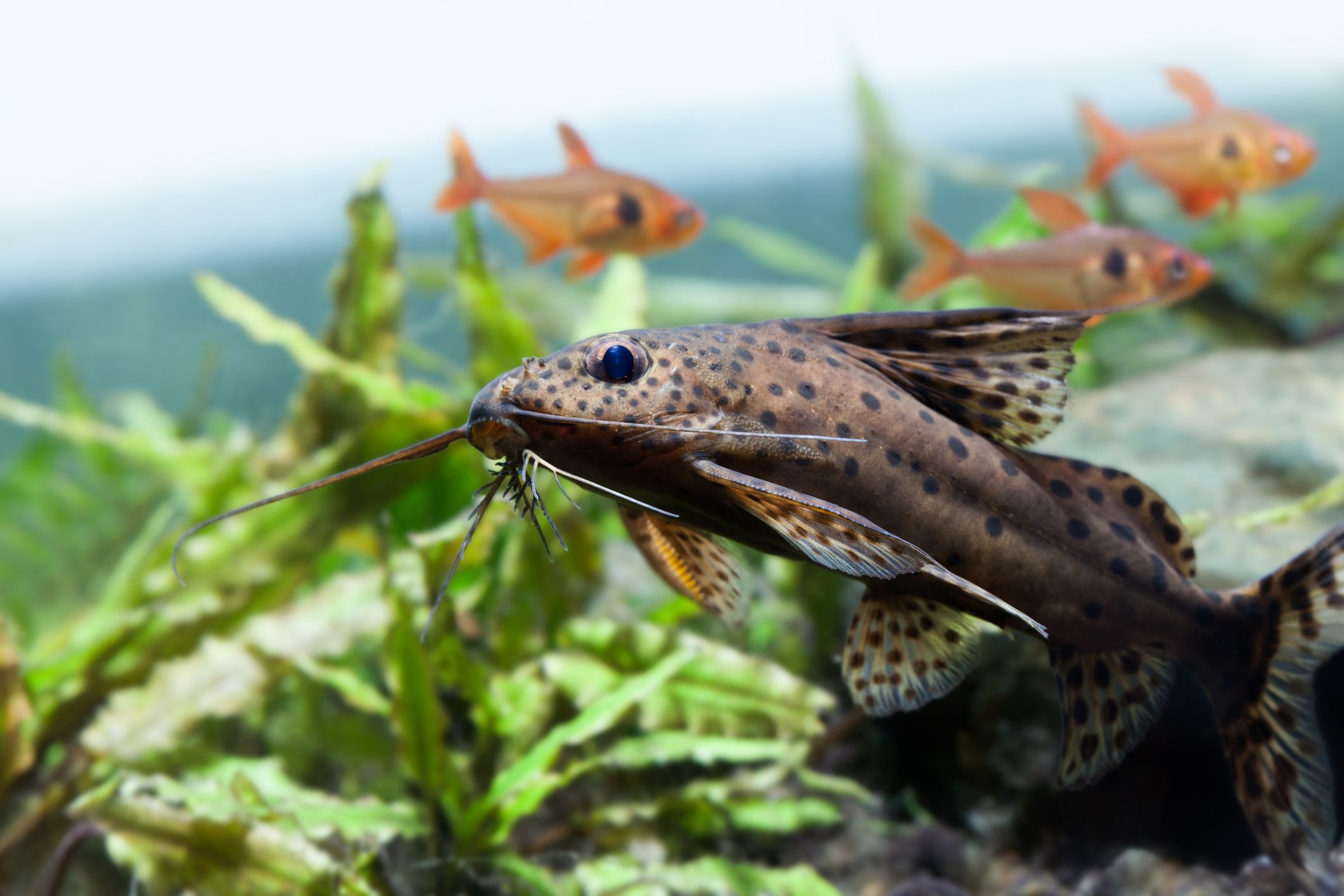
Aquarium catfish are beloved by fish enthusiasts for their unique looks, active behaviors, and the vital role they play in keeping your tank clean. Whether you’re new to fishkeeping or an experienced hobbyist, catfish make a fantastic addition to your aquarium. Their peaceful nature and ability to keep tanks free from debris make them ideal for both beginners and seasoned fish owners.
In this article, we’ll explore types of aquarium catfish, share pictures to help you identify these fascinating creatures, and discuss the best catfish for aquariums—whether you’re looking for a mini catfish or a larger specimen. We’ll also touch on how to care for a catfish pet in your home aquarium.
Types of Aquarium Catfish: Common Species and Their Features
Catfish come in various shapes, sizes, and colors, with many species making ideal pets for home aquariums. Let’s take a look at some of the most popular types:
1. Corydoras Catfish (Cory Catfish)
Corydoras are small aquarium catfish that are known for their peaceful nature and bottom-dwelling habits. They are great for cleaning up leftover food and keeping the substrate free of debris. They come in a variety of colors and patterns, including bronze, albino, and panda varieties.
-
Size: Typically 2-3 inches in length.
-
Tank Requirements: These small catfish thrive in schools, so it’s best to keep them in groups of 3 or more. They prefer well-planted tanks with soft, slightly acidic water.
Corydoras Catfish are some of the most popular small aquarium catfish for beginners due to their low maintenance needs.
2. Otocinclus Catfish (Otos)
Otocinclus catfish, also known as Otos, are tiny mini catfish that make excellent algae eaters. Their small size and friendly temperament make them a perfect addition to community tanks. Otos are especially effective at keeping tanks free of algae without disturbing plants or other fish.
-
Size: Around 1-2 inches.
-
Tank Requirements: Otos prefer slightly acidic water and a well-planted tank with plenty of algae. They thrive in groups of 5 or more.
Otos are ideal for those looking to keep a small aquarium catfish that helps maintain tank cleanliness.
3. Plecostomus Catfish (Plecos)
Plecos are one of the most well-known catfish for aquariums. These larger catfish are often kept for their algae-eating habits, as they can help keep tanks free from algae. However, they do require larger tanks due to their size, especially as they mature.
-
Size: Some plecos can grow up to 24 inches, though most species stay smaller.
-
Tank Requirements: Larger tanks are necessary for plecos, with plenty of hiding places. They prefer slightly acidic to neutral water.
While plecos are not considered mini catfish, they are a staple in many larger home aquariums due to their algae-eating benefits.
4. Bristlenose Pleco
The Bristlenose Pleco is a smaller version of the pleco, making it a perfect choice for small aquarium catfish setups. These catfish have unique bristle-like growths on their faces, giving them a distinct appearance. Bristlenose plecos are peaceful and efficient algae eaters.
-
Size: Around 4-6 inches.
-
Tank Requirements: They do well in smaller tanks (30 gallons or more) and prefer a clean, well-planted environment.
Bristlenose plecos are excellent for those looking to keep a catfish pet in a medium-sized aquarium.
5. Glass Catfish
The Glass Catfish is one of the most unique-looking catfish for aquariums due to its transparent body. These fish are gentle and prefer to live in schools of at least five. They are a bit more delicate and require stable water conditions.
-
Size: Typically 3-4 inches.
-
Tank Requirements: Glass catfish thrive in well-maintained tanks with a gentle current. They prefer slightly acidic water and a good amount of hiding spaces.
These stunning fish are best suited for those looking for something a little different in their aquarium, but they do require more careful attention than other species.
6. Rainbow Shark (Red-Finned Shark)
Though not technically a catfish, the Rainbow Shark is sometimes grouped in discussions of aquarium catfish due to its bottom-dwelling habits. They are known for their aggressive behavior, especially with other bottom-dwellers.
-
Size: Around 6 inches.
-
Tank Requirements: These fish are best kept in larger tanks with plenty of hiding spots.
While they are not the best choice for community tanks with small fish, they can be an interesting addition to a well-planted aquarium for those looking for something more dynamic.
Caring for Your Catfish Pet
Catfish are generally low-maintenance pets, but each species has its own specific needs. Here are some tips for caring for your catfish pet:
-
Water Quality: Most catfish species thrive in clean, well-maintained water. Regular water changes (20-30% weekly) and filtration are essential.
-
Feeding: Catfish are often bottom feeders, and many species will scavenge for leftover food. You can supplement their diet with algae wafers, pellets, and fresh vegetables.
-
Tank Size: Always ensure your tank is large enough to accommodate the species you’re keeping. Smaller species like Corydoras and Otocinclus can thrive in smaller tanks, while larger species like plecos need more space.
-
Tank Companions: Choose compatible fish that won’t disturb your catfish. Most catfish species are peaceful and get along well with other fish, but some larger species may be territorial.
Go Fish in Cardanoir: A Fun Break
After a day of caring for your catfish pet or learning about different types of aquarium catfish, why not unwind with a fun card game like Go Fish? Here’s a quick reminder of how to play:
-
Deal the Cards: Each player gets 5–7 cards (depending on the number of players). The rest of the deck is placed face down.
-
Ask for Cards: On your turn, ask another player for a specific rank (e.g., “Do you have any 7s?”).
-
Go Fish: If the player has the requested card, they give it to you. If not, they say “Go Fish,” and you draw a card from the deck.
-
Make Books: The goal is to collect books of four cards of the same rank (e.g., four 7s).
-
End the Game: The game ends when one player collects all their books. The player with the most books wins.
After learning about mini catfish, catfish for aquariums, and the benefits of keeping them as pets, Go Fish provides a light-hearted way to relax and enjoy a little fun with friends and family.
Whether you’re fascinated by the diverse types of aquarium catfish or looking for a catfish pet to add to your tank, catfish are a wonderful choice for any aquarium enthusiast. With their unique personalities and diverse species, they bring life and character to your aquatic environment. After exploring the world of catfish, you can also take a break with a game of Go Fish—and for everything related to card games, don’t forget to visit Cardanoir.com, where you can dive deeper into Go Fish in Cardanoir and other exciting games.